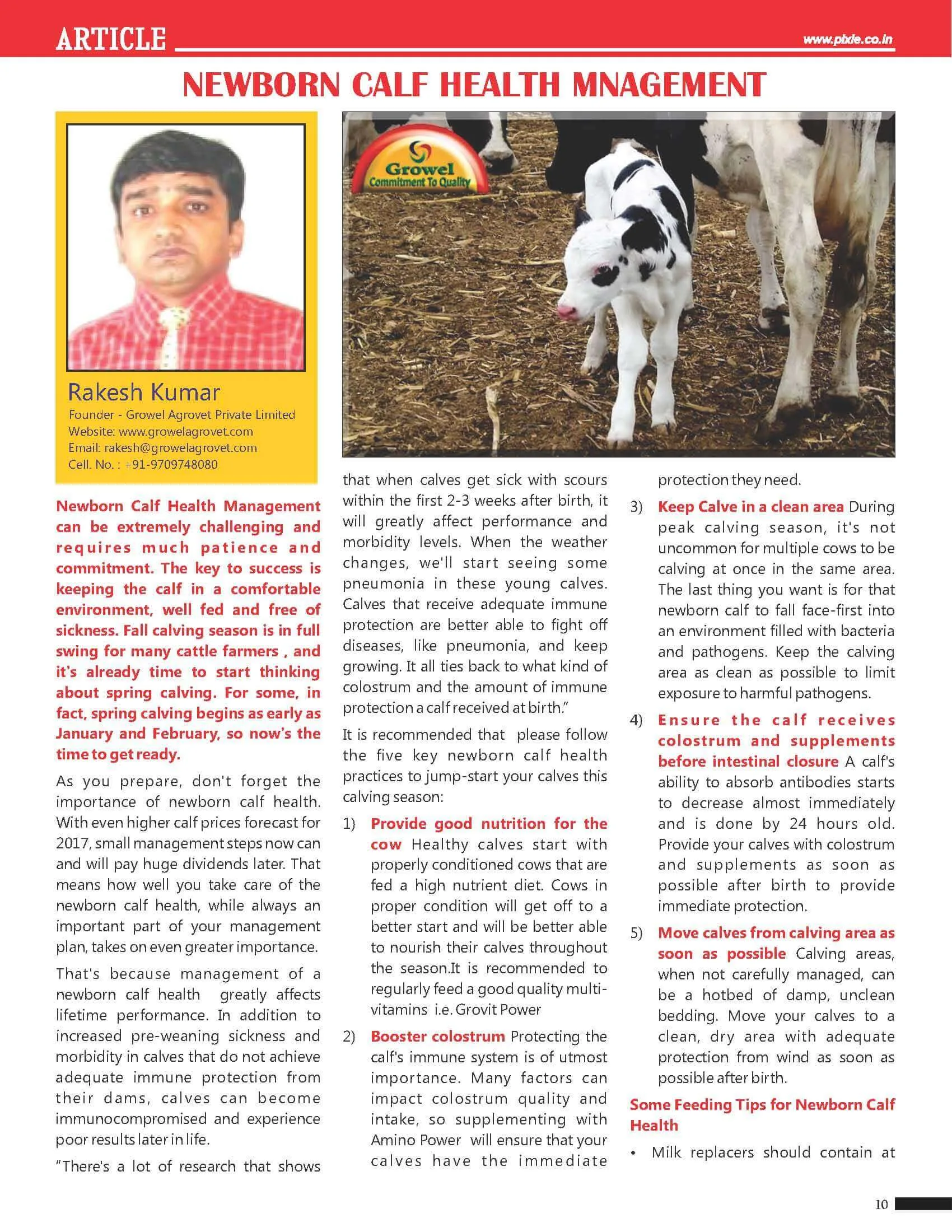
 Newborn Calf Health Management can be extremely challenging and requires much patience and commitment. The key to success is keeping the calf in a comfortable environment, well fed and free of sickness. Fall calving season is in full swing for many cattle farmers , and it’s already time to start thinking about spring calving. For some, in fact, spring calving begins as early as January and February, so now’s the time to get ready.
 Newborn Calf Health Management can be extremely challenging and requires much patience and commitment. The key to success is keeping the calf in a comfortable environment, well fed and free of sickness. Fall calving season is in full swing for many cattle farmers , and it’s already time to start thinking about spring calving. For some, in fact, spring calving begins as early as January and February, so now’s the time to get ready.
As you prepare, don’t forget the importance of newborn calf health. With even higher calf prices forecast for 2017, small management steps now can and will pay huge dividends later. That means how well you take care of the newborn calf health, while always an important part of your management plan, takes on even greater importance.
That’s because management of a newborn calf health greatly affects lifetime performance. In addition to increased pre-weaning sickness and morbidity in calves that do not achieve adequate immune protection from their dams, calves can become immunocompromised and experience poor results later in life.
“There’s a lot of research that shows that when calves get sick with scours within the first 2-3 weeks after birth, it will greatly affect performance and morbidity levels. When the weather changes, we’ll start seeing some pneumonia in these young calves. Calves that receive adequate immune protection are better able to fight off diseases, like pneumonia, and keep growing. It all ties back to what kind of colostrum and the amount of immune protection a calf received at birth.”
It is recommended that please follow the five key newborn calf health practices to jump-start your calves this calving season:
1) Provide good nutrition for the cow: Healthy calves start with properly conditioned cows that are fed a high nutrient diet. Cows in proper condition will get off to a better start and will be better able to nourish their calves throughout the season.It is recommended to regularly feed a good quality multi-vitamins i.e. Grovit Power
2) Booster colostrum: Protecting the calf’s immune system is of utmost importance. Many factors can impact colostrum quality and intake, so supplementing with Amino Power will ensure that your calves have the immediate protection they need.
3) Keep Calve in a clean area: During peak calving season, it’s not uncommon for multiple cows to be calving at once in the same area. The last thing you want is for that newborn calf to fall face-first into an environment filled with bacteria and pathogens. Keep the calving area as clean as possible to limit exposure to harmful pathogens.
4) Ensure the calf receives colostrum and supplements before intestinal closure: A calf’s ability to absorb antibodies starts to decrease almost immediately and is done by 24 hours old. Provide your calves with colostrum and supplements as soon as possible after birth to provide immediate protection.
5) Move calves from calving area as soon as possible: Calving areas, when not carefully managed, can be a hotbed of damp, unclean bedding. Move your calves to a clean, dry area with adequate protection from wind as soon as possible after birth.
Some Feeding Tips for Newborn Calf Health :
- Milk replacers should contain at least 20% protein and 10% fat and no more than 10% starch and sugars (sucrose). Milk replacers should be reconstituted and fed as directed by the manufacturers.
- Increasing the proportion of powder is often recommended for once-a-day feeding to reduce the total volume required.
- When rearing a large number of calves, it is best to draft them according to their feeding habit.
- Milk should be given in separate feeds in the morning and evening, preferably at a regular time. As the calf gets older, one feed per day is acceptable – preferably in the morning with access to plenty of cool, clean water thereafter. Split feeding is ideal.
- Do not over-feed calves, especially during their first three weeks of life, as it may cause scouring. As a guide milk should be fed at 10% of the calf’s body weight per day. Thus, a 30 kg calf should be fed at least 3 L of whole milk per day.
- Start baby and weak calves on 250 mL of milk, five times a day for the first 24–48 hours and work up to 2 L twice a day.
- The best milk temperature is between 35° and 38°C, but it may be fed as cold as 6°C.
- Do not suddenly change the quantity of milk being fed.
- Always provide clean fresh water.
- Solid feed such as good quality hay and concentrates can be introduced in limited amounts from one to two weeks of age.
All of these tips can help get your calves off to the right start, but no management practice is as important as getting antibodies to calves immediately after birth. Feeding good quality antibody products are a great way to give calves extra protection.
Make sure your calves are on the path to success this calving season by providing them with immediate immune protection. A management plan that incorporates good cow nutrition, proper colostrum management and supplementation, a clean calving area and adequate protection outside of the calving area, will help your calves perform later on.
You should also read Calf Health Management