Share With:

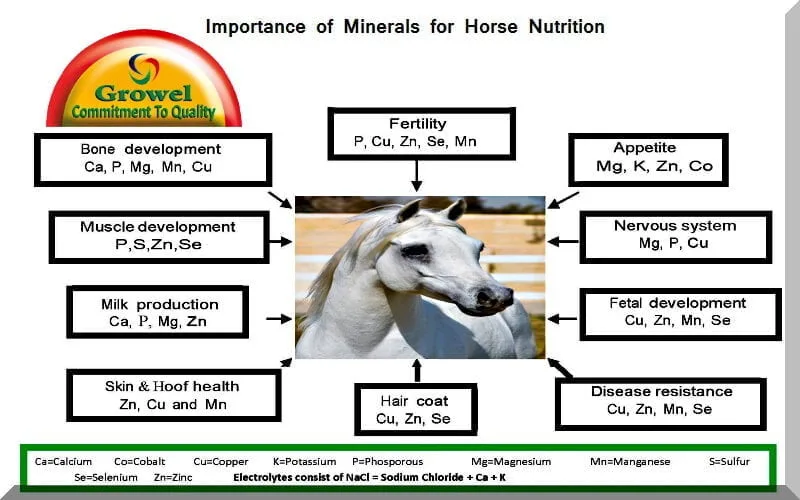
Importance of Minerals for Horse Nutrition

There are a variety of important minerals for horse nutrition. it is important not to put too great of an emphasis on any one particular mineral, although some do require greater supplementation than others.For example, rarely iron or iodine will be seen listed in the guaranteed analysis on a horse feed tag, but most all commercially prepared feeds will have guaranteed levels of copper and zinc. The reason for this is that some nutrients are naturally present in most forages, but others are often not present in high enough levels to fulfill the needs of today’s horse – a horse with the demands of performance placed on it.

It is also important to give minerals supplements to horse because without minerals, horses could not metabolize fats, proteins, or carbohydrates; their muscles and nerves would not function normally; and their bones could not support their own weight.Minerals help the blood transport oxygen throughout the body, maintain the body’s acid/base and fluid balances, and are necessary components of virtually every enzyme the horse needs for everyday metabolism. They are integral parts of some vitamins, hormones, and amino acids. Yet they make up only about 4% of the horse’s total body weight (as compared to 30% to 35% fats, carbohydrates, and proteins, and about 60% water). In the case of minerals, a little bit means a lot. In this article we will discuss about minerals for horse nutrition.

Below is a quick guide to some of the basic minerals for horse nutrition and their functions :

Calcium & Phosphorus Calcium and phosphorus are important minerals for horse nutrition. Calcium and phosphorus are needed for healthy teeth and bones. Greatest need is in the first year of a horse’s life when it grows the majority of its height. Accordingly, lactating mares need higher amounts of calcium and phosphorus to keep elevated levels in their milk. Calcium and phosphorus should be at least a 1 to 1 ratio. Since grains are low in calcium and high in phosphorus, some grains are adequate to meet phosphorus requirements but not calcium needs. Therefore, additional calcium is needed to develop the 1 to 1 ratio. Horses  foremost need the minerals salt, calcium and phosphorus. Salt is lost through sweat and urine so it should be available free choice to the horse at all times.

Magnesium is necessary to reduce stress and irritability. Although rare, deficiency may occur in horses on high grain diets or animals in high-stress situations. If deficient, horses are high-strung, and jumpy. Rations with significant forage generally have no problem with magnesium deficiency.  Grass tetany as seen in cattle is not an issue in horses, as horses absorb magnesium much more efficiently than cattle do.  Toxicities are not generally seen in horses.

Potassium has a major function in muscle activity, and acid-base balance. It may be deficient in horses on high-grain diets. Deficiency symptoms may be reduced intakes, muscle weakness, diarrhea, and a slow-down in growth. Forage is important to prevent potassium deficiency. Toxicity is not generally an issue if adequate water is provided, as excesses are excreted in the urine.

Potassium has gained most of its notoriety with the onset of HYPP in the quarter horse world. Feeding elevated levels of potassium can induce an attack in an HYPP-positive horse. Total dietary potassium in a HYPP-positive horse should be kept to less than 1%.

Cobalt is necessary for synthesis of vitamin B12 in the intestinal tract. However, the requirement is very low.

Copper is necessary for hemoglobin formation, along with iron and vitamin B12. Anemia and abnormal bone development in foals may be symptoms of deficiency. Often deficiencies occur in suckling foals, as the mare’s milk has very low levels of copper.  Care should be taken with pregnant mares to feed a diet sufficient in copper during the last 3-4 months of gestation, when the unborn foal is laying down stores of copper in it’s liver to get through the nursing period without problems. Copper levels are also of great interest in developmental orthopedic diseases.  Toxicity is very rare in horses, and deficiencies in mature horses are also not seen often.

Iodine is needed to make thyroxin, which controls the ratio of body metabolism. When iodine is deficient, foals may be born dead. Mares may be unable to nurse or have higher than normal naval ill when iodine is deficient.  Both toxicity and deficiency lead to hyperthyroidism, due to the fact that a toxicity impairs/inhibits release of thyroid hormones, while a deficiency doesn’t allow for sufficient hormone production.

Iron is necessary for the formation of hemoglobin, which enables the blood to carry oxygen. Iron deficiency anemia is a deficiency symptom. Horses under the heavy stress of racing or showing may develop deficiency symptoms, as well as horses with chronic blood loss from parasite damage.  Symptoms of toxicity can include depression, diarrhea, or increased susceptibility to bacterial infections.

Manganese is essential for bone formation, growth and reproduction. Manganese deficiency symptoms in horse nutrition may be poor growth, lameness or bowing of legs, as well as reproductive dysfunction. Most feed stuffs are rich in manganese.

Selenium is associated with white muscle disease and the death of foals. Deficient animals have muscle disorders, such as tying-up. However, greater than 5 ppm selenium in the ration may be toxic to the horse.  Feed companies are not allowed to supplement selenium at a rate that would give more than 0.3 ppm in the total daily intake when fed as directed.  Should be fed with Vitamin E, as they work together in the body.

Zinc gives gloss or “bloom” to hair coat and is needed for protein synthesis and metabolism. In horse nutrition needs to be kept in proper ratio with copper, with the ideal ratio being between 1:3 and 1:4 copper to zinc.  Zinc is also being heavily looked at in relation to the occurrence of developmental orthopedic diseases.

Minerals for horse nutrition though needed in very small amounts but are essential for your horse’s health.You should also see Vitamins & Minerals for Horse

For a regular updates of horse nutrition & health you should join our Facebook Group How To Do Profitable Poultry & Cattle Farming ?
Veterinary Products

Similar News

Veterinary Franchise & Distribution Opportunities

Join Growel, one of the top veterinary manufacturers in India-and grow your business with trusted, high-quality veterinary products.

  • Proven quality & innovation
  • Global exports as a reliable veterinary medicine supplier in India
  • Backed by 100% quality assurance
  • Recognized among the top 10 veterinary medicine company in India

Our Business Partners

FAQs

Growel Agrovet’s Veterinary Products include a complete range of animal health and nutritional supplements. These cover vitamins, minerals, amino acids, herbal tonics, calcium sources, immunity boosters, milk enhancers, disinfectants, and water sanitizers — all formulated for poultry, cattle, aqua, and other livestock.

Growel Agrovet products are suitable for poultry, dairy cattle, goats, pigs, horses, sheep, pets, and aquaculture species. Each product is tested for safety, bioavailability, and performance in different livestock systems.

Growel Agrovet offers an extensive range of veterinary subcategories:

  • Vitamin & Mineral Supplements– Maintain nutrition balance.
  • Amino Acid & Growth Promoters– Improve growth and feed efficiency.
  • Calcium Supplements– Support bones, eggshell, and milk production.
  • Herbal & Liver Tonics– Enhance metabolism and performance naturally.
  • Respiratory Healthcare Products– Manage CRD and respiratory infections.
  • Immunity Booster Supplements– Strengthen disease resistance.
  • Animal Milk Booster Supplements– Improve lactation and milk quality.
  • Feed Premixes– Used for preparing poultry, cattle, and aqua feed.
  • Water Sanitizers & Disinfectants– Maintain hygiene and biosecurity.
  • Electrolytes & Probiotics– Relieve heat stress and improve digestion.
  • Mycotoxin Binders– Protect feed and gut health.

Growel Agrovet’s products enhance growth, feed conversion ratio (FCR), reproduction, immunity, and yield. Regular use supports healthier, disease-resistant animals and better overall farm profitability.

Yes. All Growel Agrovet formulations are non-antibiotic, herbal, and residue-free. They ensure safe, natural performance without affecting meat, milk, or egg quality.

Most products are water-soluble or feed-mixable. Tonics and calcium supplements can be given directly or mixed with feed or water, while disinfectants and sanitizers are used by spraying or mixing as per label instructions.

Supplements should be used regularly for growth, immunity, stress management, and disease prevention. They are particularly beneficial during heat stress, vaccination, peak production, or recovery periods.

Calcium supplements help in developing strong bones, improving eggshell thickness, and increasing milk yield. They prevent calcium deficiency, leg weakness, and reproductive disorders.

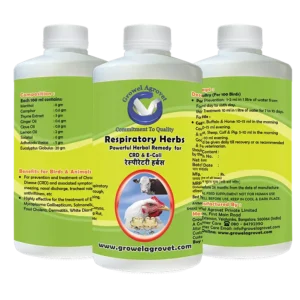
Growel Agrovet’s respiratory healthcare range (like Respiratory Herbs and Viraclean) helps control Chronic Respiratory Disease (CRD), Infectious Bronchitis (IB), and other infections by improving lung function and reducing respiratory distress.

Milk booster supplements are specially formulated to enhance lactation, milk fat percentage, and SNF levels. They contain amino acids, vitamins, and herbal galactagogues that support continuous milk flow and udder health.

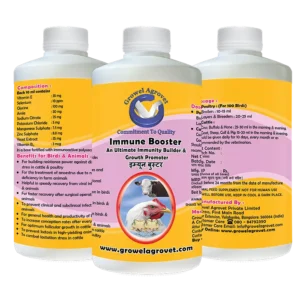
Immunity boosters strengthen the animal’s natural defense system, reduce mortality, and ensure faster recovery from diseases or heat stress. They help maintain consistent productivity and health in farms.

Feed premixes are balanced blends of essential nutrients used to prepare complete feed for poultry, aqua, and livestock. They guarantee uniform nutrient supply, reduce formulation errors, and enhance feed conversion efficiency.

Disinfectants and water sanitizers like Viraclean and Aquacure maintain biosecurity by controlling harmful bacteria and viruses in sheds, drinkers, and equipment. Regular use prevents disease outbreaks and ensures a healthier environment.

Yes, most products are compatible and can be used in combination for better results. For instance, pairing an immunity booster with a vitamin tonic or calcium supplement enhances overall animal performance.

You can purchase Growel Agrovet products from authorized distributors, Amazon , or directly via the official website: www.growelagrovet.com.

All formulations are developed using premium ingredients and rigorous quality checks. Each batch undergoes laboratory testing to ensure purity, safety, and performance.

No. Growel Agrovet formulations are safe, non-toxic, and residue-free. They do not interfere with regular medications or feed components when used as directed.

Yes. Many Growel Agrovet products are free from synthetic antibiotics, making them suitable for organic and sustainable livestock systems.

Visible improvements in feed intake, health, or productivity can usually be seen within 2–7 days of continuous use, depending on the animal’s health status and management conditions.

Growel Agrovet offers scientifically formulated, field-tested, and result-oriented animal healthcare products. Farmers trust the brand for its innovation, consistent quality, and performance-driven approach across India and abroad.

  • Identify the species: poultry vs cattle vs pigs etc.

  • Identify production stage: growing, breeding, layer/egg, recovery.

  • Identify the need: growth, immunity, organ health, water quality, hygiene.

  • Review the product label for species-specific dosage, usage instructions.

  • If unsure, consult our technical support or your veterinary advisor for guidance.

Yes. Our formulations are designed to be safe across various production systems — from large commercial poultry or cattle operations to smaller farms and even pet/companion-bird setups. Always follow the label instructions and consult your veterinarian if combining with other treatments.

Depending on the product type:

  • Water-soluble supplements: mix into drinking-water according to recommended dosage.
  • Feed-premixes: mix thoroughly into feed at specified incorporation rates.
  • Disinfectants/sanitizers: apply as per usage instructions (spray, dip, drinking-water dose).
  • Tonics/herbal syrups: dose using provided measuring device, often for a defined number of days.

In most cases, yes — many of our supplements are designed to be compatible with vaccines and standard medications. However, when using prescription medicines or during disease outbreaks, always consult your veterinarian before combining. Avoid overdosing or overlapping similar active ingredients.

Water sanitizers (acidifiers + sanitizing agents) help maintain clean drinking-water systems, reduce microbial load, and improve water intake and animal health. Disinfectants, especially broad-spectrum types, help eliminate bacteria, viruses, and fungi on surfaces, feeders, drinkers and housing—crucial for bio-security in commercial and large-scale operations.

If you are interested in becoming a distributor or dealer of our veterinary product line, please visit the Distributor Enquiry page or call or WhatsApp us at +91-8084792390